GODS & MAHARAJAS

‘Plus ça change, plus c’est la même chose’ — the more things change, the more they remain the same
Jean-Baptiste Alphonse Karr, Les Guêpes, January 1849


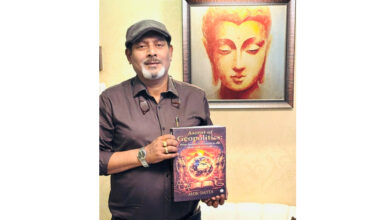
Author Jayant Mohan, Advocate, Supreme Court of India
THE SIX THEMES RUNNING THROUGH THIS ROUND
- Mythical Realism. Latin America’s magical realism is fiction dressed as fact. India’s mythical realism is the inversion — fact so strange it reads like fiction, and it is filed in the law reports.
- Civilisational. One of the few living ancient civilisations whose oldest ideas were never retired to a museum, but pleaded and ruled upon in open court. A civilisation cross-examining itself.
- Thesis, antithesis, synthesis. An old order asserts itself; its opposite contradicts it; the courtroom makes the third thing that carries something of both.
- Plus ça change. Law must change with its times; precedent holds it steady. Justice is administered in the space between certainty and change.
- What a republic honours. Every civilisation invents honours, and every one argues about who deserved them — from the Navratna to the Legion of Honour to the Bharat Ratna.
- The limits of power. A President who abolished kings by a midnight order; a Governor-General impeached for what he did to one. Accountability, tested at both ends of an empire.
Q1. Can you provide an overview of your book and how it addresses key challenges in the world today?
Gods & Maharajas is a book of true stories from the law reports — cases in which courts had to decide questions no court should ever have had to answer. If the first thing readers hear about is the gods, the second half of the title is where the constitutional drama lives. This is a book about crowns: how 565 princely states were talked into a republic, what was promised to them, and what happened when the promise was broken. It is about a President who derecognised every Ruler in India by a single order at midnight, and eleven judges who told him he could not.
Underneath it all runs a civilisational argument. India is one of the very few living civilisations whose most ancient ideas continued to thrive — they were pleaded, evidenced and ruled upon in open court. When a judge had to decide what Manu meant by the four varnas, or when eleven judges had to decide what the paramountcy of the Grand Moghul and the British Crown amounted to inside a republic, this civilisation was not being studied by outsiders. It was being litigated, by its own people, on its own record. Most societies broke with their ancient order and moved on. India carried hers into the courtroom and made her argue her case like any other litigant — which is why these judgments are, in the most literal sense, a civilisation’s cross-examination of itself.
Latin America gave that collision a name. Magical realism, India’s version, which I call mythical realism, runs the other way round. Here the setting is a law report, the most unforgiving prose there is, and what invades it is not invention but fact: a court asked whether a hill can belong to the gods worshipped on it, a President abolishing kings by a stroke of the pen, an independence hour fixed by the position of the Moon. Nothing is imagined. It is simply too strange to believe, and it is on the record. Magical realism is fiction dressed as fact; mythical realism is fact that reads like fiction — and the conflict between the two parallel realities that produced it, the world of miracles and the world of evidence, is the engine of every chapter.
Q2. What inspired you to write this book, and what specific expertise or experiences do you bring to the subject matter?
Two things I could not help but notice. The first was that a judgment I was reading for a brief — the Privy Purses case — contained an entire lost country inside it: instruments of accession, covenants, Lord Reading’s letter to the Nizam, the schedule fixing Rs 25 lakh a year for Gwalior and Rs 192 for Kotodia. Nobody reads a judgment for that. Somebody should.
The second was a sentence in a memoir. Dr K. N. Katju, the great Allahabad advocate, wrote a chapter in Experiments in Advocacy about a case he won for the cousins of the Maharaja of Banaras — two judges who disagreed so bitterly they ended the hearing speaking to each other only through counsel, and then delivered a unanimous judgment. A practising lawyer knows what that sentence means. That is the expertise I bring: not the historian’s, but the advocate’s — I know how a case is actually built, which admission decides it, and why a lawyer’s small discovery in a law report a week before the hearing can cost a Maharaja half an estate. I read these judgments the way I read a brief, and then wrote down the story I found underneath.
Q3. Could you share some of the most valuable insights or takeaways that readers can expect from your book?
Five principles, each of which surprises the reader who meets it for the first time.
- Constitutional Guarantees to the Rulers of princely states could not have been withdrawn overnight. The Constitution had promised the kings and maharajas that their titles and privy purse is assured. The Government under Indira Gandhi ‘s Prime minister Ship had abolished the privy purses by a stroke of pen at midnight by presidential order . The Supreme Court held that the promise made to the kings and maharajas could not have been withdrawn in this manner. At the stroke of midnight Hour Independence was declared and 23 years later at the stroke of midnight hour in 1970 the solemn assurances made to the princely rulers was also
- Every civilisation invents honours — and every one of them argues about who deserved them. The Navratna of a Gupta and a Mughal court, the peerage that forced Magna Carta, Napoleon’s Legion of Honour, the Oscars, the Nobel. Upholding the Bharat Ratna and the Padma awards against Article 18, the Supreme Court still cautioned that the number may need to be restricted, or the whole process of giving awards becomes diluted. An honour must stay rare enough to mean something.
- Custom defeats the general law — but only when it is proved. A widow adopted an orphan of a different gotra, which Mitakshara law forbids. The adoption stood, because a district’s recorded book of customs said it was allowed.
- Where feelings run high, believe the documents. In a two-century temple dispute the Privy Council refused to rely on oral testimony at all, holding that in such matters feelings are easily inflamed, and decided the case on papers from 1795 and 1832.
Q4. Can you highlight any case studies or real-world examples from your book that illustrate the principles you discuss?
- The midnight order. In H. H. Maharajadhiraja Madhav Rao Jiwaji vs Union of India (1970), eleven judges by nine to two struck down the derecognition of every Ruler in India. Chief Justice Hidayatullah’s line is the book’s spine: however wide the power, it does not extend to withdrawing recognition of all the Rulers by a midnight order. The sequel is pure political theatre — Parliament dissolved, a Garibi Hatao election won with 352 of 521 seats, and the 26th Amendment passed lawfully in November 1971.
- The governor who made a Maharaja and was impeached for it. Warren Hastings installed Raja Mahip Narain Singh at Banaras after squeezing his predecessor Chait Singh for lakh after lakh. That extortion became one of the principal charges when Edmund Burke impeached him at Westminster Hall in 1788. Seven years later he was acquitted and ruined.
- The Bharat Ratna in the dock. Balaji Raghavan vs Union of India (1995) asked whether the National Awards are ‘titles’ barred by Article 18. A five-judge bench held they are not — and then directed that a committee lay down guidelines to prevent misuse.
- One word, spoken every morning. The Maharaja of Banaras lost half the Rs 80 lakh Narhan estate because he admitted reciting ‘Gautam’ as his gotra in daily worship — and because a precedent, later held to have been misunderstood, was found in the law reports days before the hearing.
Q5. Are there any particular challenges or obstacles you encountered while writing this book, and how did you overcome them?
Three, and they were not the ones I expected.
The First was trying to understand the complex socio cultural and religious background of the ancient practices and beliefs despite the seemingly unbelievable it may sound and the adjudication based on modern principles of rationality and logic. For Instance on one side there is the caste system and the practices of a particular caste meticulously detailed in the Court judgments of Pre Independence India and on the other side is whether the person claiming a particular custom as per caste was able to prove it with actual documentary evidence . Similarly Our Visionary Constitution Framers had progressive ideas and modern outlook whereby untouchability and caste based discrimination was abolished .However simultaneously the very same constitution recognises special rights of reservations for scheduled Castes and Scheduled Tribes persons who had to face historical injustice for centuries .Understanding the contradictory dynamics and putting it into simple language was a task which required considerable efforts and brainstorming.
The second was understanding the approach of the English Educated Judges in adjudicating complex issues and matters by removing the irrelevant and unnecessary and deciding upon what was the real issue to be decided .The judges kept cutting down the contentions before them to a minimum till the only real and important issue had to sharpened like a razor’s edge based upon sound reasoning and logic.
The third was that this book reaches into living politics. Issue of reservations in jobs based upon caste is still argued about at dinner tables. My rule was to let the record speak: How caste was integral part of the social cultural life in India of the 19th and early 20th Century. But also how when the courts decided in a court judgment a particular community of persons as belonging to lower caste resulted in considerable distress and discontent for the community and ultimately how the situation was resolved by a subsequent High Court decision. All these aspects are in the book, in their own words, and the readers may form their own opinions .
Q6. What do you hope readers will gain from reading your book, and how do you envision it making a positive impact on their lives?
I would like readers to stop treating faith and reason as opponents, and to see instead how often a society arrives at a third position that holds both. In the same fortnight of 1947 this country consulted two astrologers of Ujjain about the auspicious moment for freedom and sat down to write one of the longest written constitutions in the world. That is not a contradiction to be embarrassed about. It is a synthesis — and it is exactly what the judges in this book do, chapter after chapter, when belief stands on one side of the courtroom and evidence on the other.
And I would like citizens to see, in these pages, that institutions do correct themselves — often slowly, and usually without anybody noticing. An empire built a tribunal whose only purpose was to undo the frauds of its own officers. A British Parliament put its most powerful colonial administrator on trial for seven years. A court told an Indian government it had exceeded its authority, and that government went to the electorate rather than around the court. None of it is tidy. All of it is a system working.
Q7. In a rapidly changing environment, how does your book stay relevant and adaptable for readers over time?
The catchline for this book belongs to the French journalist Jean-Baptiste Alphonse Karr, who wrote in his journal Les Guêpes in January 1849: ‘Plus ça change, plus c’est la même chose’ — the more things change, the more they remain the same. That is not cynicism — it is a description of how a legal system actually works. Law must change to meet the needs and requirements of its times; statutes and even constitutions are amended, and society moves on. But the doctrine of precedent runs the other way, holding the system steady so that principles are applied uniformly and a citizen can know in advance what the law is. Certainty and change are not enemies. Justice is administered in the space between them, and that space is exactly where every story in this book sits.
So the book keeps returning. Every time a constitutional guarantee is withdrawn, the Privy Purses case is the answer. Every Republic Day, when the honours list appears and the argument begins about who deserved it and how many were given, the caution in Balaji Raghavan is waiting. And the longest reach belongs to Warren Hastings: the words that ground the impeachment of an American President — ‘high crimes and misdemeanours’ — are the words used against him, and in 2021 the United States Senate went back to his trial to settle whether a President could be tried after leaving office. A prosecution about a Raja of Banaras and a demand for five lakh rupees became an authority cited in Washington two centuries later.
As long as states hand out honours, executives test their limits and communities argue about who they are, courts will go back to these first principles. The stories are old. The questions are not going anywhere.
Order your copy of Gods & Maharajas by AuthorJayant Mohan on Amazon today and discover the true courtroom stories behind India’s princely states, its gods, and its Constitution — where faith meets evidence, and a civilisation cross-examines itself.