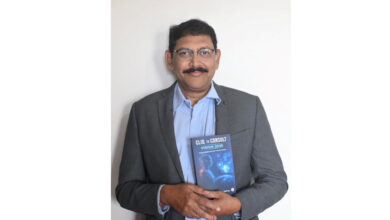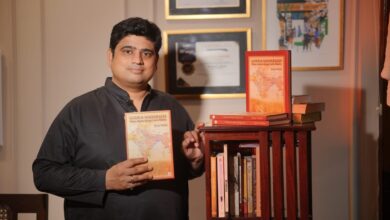
The S.H.I.F.T. Leadership Book by Author Chandrra Chorghe | From Busy Work to Real Results

Chandrra Chorghe is the Chief Operating Officer of Total Tools & Equipments Pvt. Ltd., a Qualified Independent Director, and a lifelong learner who believes that true leadership is not about solving more problems—it is about preventing them through better systems, better decisions, and better people.
With over two decades of experience, she has helped organisations move beyond firefighting to building systems that create sustainable growth.

A passionate Toastmaster, Chandrra enjoys transforming complex management ideas into practical insights that anyone can apply. Through her writing and speeches, she challenges conventional thinking and encourages individuals and organisations to shift from reacting to today’s crises to intentionally shaping tomorrow’s opportunities.
The S.H.I.F.T. is inspired by her own leadership journey and the lessons learned from years of navigating business challenges.
Her mission is simple: to help people stop surviving the present and start designing the future, spread financial literacy, and mentor aspiring leaders to unlock their full potential.
THE SHIFT — THE CORE IDEA
THE SHIFT — Moving from Managing Tasks to Leading Outcomes is a practical leadership book built around a simple belief:
Leadership is not about a title; it is about the choices we make every day.
We live in a world where businesses are changing rapidly, teams are becoming more diverse, technology is transforming the way we work, and leaders are expected to deliver more with less time and resources. Yet one challenge remains constant—many capable professionals are promoted into leadership without ever being taught how to actually lead.
THE SHIFT addresses this gap.
The book brings together five interconnected pillars:
- Self-Mastery
- High-Impact Priorities
- Influence & Inspiration
- Frameworks & Focus
- Team Trust & Transformation
It takes the reader beyond managing tasks and firefighting towards thinking strategically, making better decisions, building trust, developing people, and creating sustainable results.
What makes the book different is that it connects the personal and professional sides of leadership.
Our upbringing, experiences, mentors, founders, coaches, and organisational culture all shape how we lead. Understanding that influence is often the first step towards becoming a more intentional leader.
Ultimately, THE SHIFT is not about becoming a different person. It is about becoming a more intentional version of the leader you already are—and moving from being busy to creating real results.
1. Can you provide an overview of your book and how it addresses key challenges in the world today?
THE SHIFT — Moving from Managing Tasks to Leading Outcomes is a practical leadership book built around a simple belief: leadership is not about a title; it is about the choices we make every day.
We live in a world where businesses are changing rapidly, teams are becoming more diverse, technology is transforming the way we work, and leaders are expected to deliver more with less time and resources. Yet one challenge remains constant—many capable professionals are promoted into leadership without ever being taught how to actually lead.
THE SHIFT addresses this gap.
The book brings together five interconnected pillars—Self-Mastery, High-Impact Priorities, Influence & Inspiration, Frameworks & Focus, and Team Trust & Transformation. It takes the reader beyond managing tasks and firefighting towards thinking strategically, making better decisions, building trust, developing people, and creating sustainable results.
What makes the book different is that it connects the personal and professional sides of leadership. Our upbringing, experiences, mentors, founders, coaches, and organisational culture all shape how we lead. Understanding that influence is often the first step towards becoming a more intentional leader.
Ultimately, THE SHIFT is not about becoming a different person. It is about becoming a more intentional version of the leader you already are—and moving from being busy to creating real results.
2. What inspired you to write this book, and what specific expertise or experiences do you bring to the subject matter?
THE SHIFT came from a combination of experiences—my own leadership journey, watching capable managers struggle with the transition from being good at their jobs to actually leading people, and many conversations I have had while coaching and working with leaders.
But there was one conversation that stayed with me.
My late founder, Linesh Sheth, encouraged me to share what I had learned over the years. He told me, “You never know who can benefit from your experience.” More importantly, he asked me to write in my own style. He reminded me that every writer is unique and has their own voice and style. That gave me the confidence to stop thinking about how a leadership book should sound and simply write from what I had experienced, observed, and learned.
I bring more than three decades of experience working across different business environments, including corporate organisations and family businesses, and working closely with founders, senior leaders, managers, and teams. I have experienced leadership from different sides—strategy and execution, growth and crisis, people and performance, mentoring and being mentored.
So, THE SHIFT is not written from theory alone. It is written from the boardroom, the shop floor, difficult conversations, mistakes, successes, coaching conversations, and lessons learned along the way.
I have also tried to be honest about the fact that leadership is never a finished journey. I continue to learn, unlearn, and shift myself.
That is perhaps the most important expertise I bring to this book—not the claim that I have all the answers, but the willingness to share what decades of experience have taught me and what I am still learning.
3. Could you share some of the most valuable insights or takeaways that readers can expect from your book?
The biggest takeaway from THE SHIFT is that leadership is not about doing more. It is about doing what matters, influencing people, and creating outcomes that last.
I would like readers to walk away with a few fundamental shifts in the way they think about leadership:
- From busy work to real results — being constantly occupied does not necessarily mean we are creating value.
- From managing tasks to leading outcomes — leaders need to step beyond execution and develop the ability to see the bigger picture.
- From authority to influence — a title may give you authority, but it does not automatically earn you trust or commitment.
- From solving everything yourself to building people — one of the biggest transitions in leadership is learning to delegate, trust, and develop others.
- From reacting to thinking strategically — leaders need to create space to think, anticipate, and make decisions rather than constantly firefighting.
- From individual performance to organisational impact — leadership becomes meaningful when we create systems, culture, and future leaders that can succeed even without us.
The book also encourages readers to look inward. Who we are as leaders is influenced by our upbringing, experiences, founders, mentors, coaches, and organisational culture. Becoming aware of those influences helps us make more conscious choices about how we lead.
Ultimately, I want readers to ask themselves one simple question:
“Am I merely managing what is in front of me, or am I actually leading what comes next?”
That question, for me, is at the heart of THE SHIFT.
4. Can you highlight any case studies or real-world examples from your book that illustrate the principles you discuss?
One of the most important real-life moments behind THE SHIFT happened in 2015.
During my birthday celebration, a consultant described me as a “firefighter.” At first, I did not take it as a compliment. I had always seen myself as someone who could step into difficult situations, solve problems, and get things moving. But that comment made me pause and ask myself a difficult question:
“If I am always the person solving the next problem, am I actually building an organisation where fewer problems need to come to me?”
That moment became a turning point in how I looked at my own leadership.
I realised that being dependable and constantly solving problems can sometimes become a leadership trap. You can become so good at firefighting that everyone starts bringing the fires to you. You remain busy, people depend on you, and the organisation may even celebrate your ability to rescue situations—but you may not be creating enough space for strategic thinking, delegation, developing people, and building systems.
That experience reflects several of the principles in THE SHIFT—moving from tasks to priorities, from reaction to strategic thinking, from doing everything yourself to developing people, and ultimately from being busy to creating real results.
There are many other stories and case studies in the book drawn from my years of working with founders, leaders, teams, and organisations. But I chose to include them not simply to tell stories. I wanted readers to recognise themselves in those situations and ask, “Could I be doing the same thing?”
For me, the most valuable case study is often the one that makes you stop, look in the mirror, and decide to make your own shift.
5. Are there any particular challenges or obstacles you encountered while writing this book, and how did you overcome them?
There were several challenges, and honestly, THE SHIFT almost did not get written.
The first challenge was finding the time. Writing a book while continuing with professional responsibilities requires discipline and commitment. There were many days when work, responsibilities, and deadlines took priority, and writing had to wait.
The second was more personal—the question of whether I really had something new to say. There are already so many leadership books, frameworks, podcasts, and seminars. I often wondered, “Does the world really need another leadership book?”
Then came the challenge of taking more than three decades of experiences, observations, successes, failures, conversations, and lessons and turning them into something structured and useful rather than simply telling my story.
And finally, there was the challenge of finding my own voice. I remembered what my late founder, Linesh Sheth, had told me—every writer is unique and has their own style. That became an important reminder not to try to sound like someone else.
I overcame these challenges by going back to one simple question:
“Who could benefit from what I have learned?”
Once I focused on that rather than on writing the “perfect” book, the process became much more meaningful. I wrote from experience, kept questioning my own thinking, organised the lessons into practical frameworks, and allowed myself to write in my own voice.
I also realised that the book did not need to have all the answers. It needed to start the right conversations and give readers something they could actually apply.
In many ways, writing THE SHIFT became another shift for me—from keeping my learnings within my own professional journey to consciously sharing them with others.
BUY THE S.H.I.F.T. ON AMAZON TODAY
Buy THE S.H.I.F.T. by Chandrra Chorghe on Amazon today and start moving from busy work to real results.